Fish River Canyon Hike in Namibia
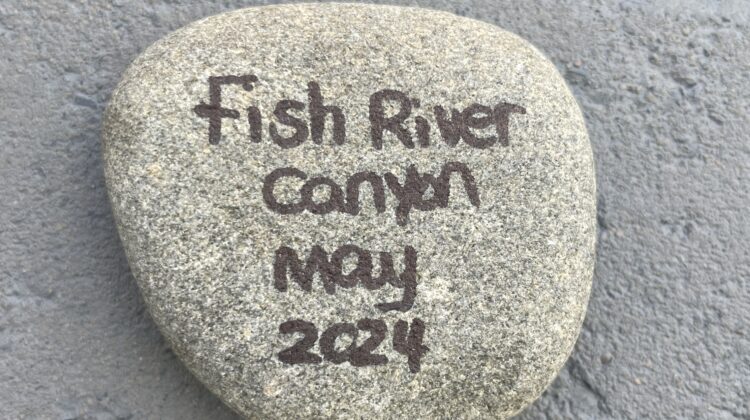
We did a thing! We hiked 5 days in the second largest canyon in the world, in the Fish River Canyon located in Richtersveld Transfrontier Park in Namibia.
A minimum of three people is required to make a booking, with a maximum of thirty. This hike is only open for about four months during the winter, between May and September. The hiking trail is closed for the remainder of the year because it’s too dry, hot, and dangerous. The winter months normally have sufficient water flow, but 2024 was a different story. In 2024, we were warned of the exceptionally low water levels.
Namibia Wildlife Resorts (NWR) published a press release informing the public that there was sufficient water, and in areas where water was scarce, water marshals and water tanks had been placed to assist hikers along the way. With that information, we felt excited and confident about proceeding with the hike. Nevertheless, we monitored the “I Hiked the Fish River Canyon” Facebook page for the first two weeks to get firsthand reports (without NWR bias) from the initial brave groups. To our disappointment, their posts complained about the low water levels, poor water quality, diarrhea, extreme heat causing heat strokes, and, worst of all, two helicopter evacuations. Uhm…are we still going to do this? Are we foolish to still consider something like this?
However, after those two weeks, and with advice from friends who had completed the hike a week before us (thanks Marliet and Cornel), we gathered useful information to help us make better-informed decisions and plan our trip. One obvious thing that everyone had to plan very carefully around was water. This hike would require meticulous planning on locating fresh water, purchasing all necessary water filtration equipment, and knowing how to use it.
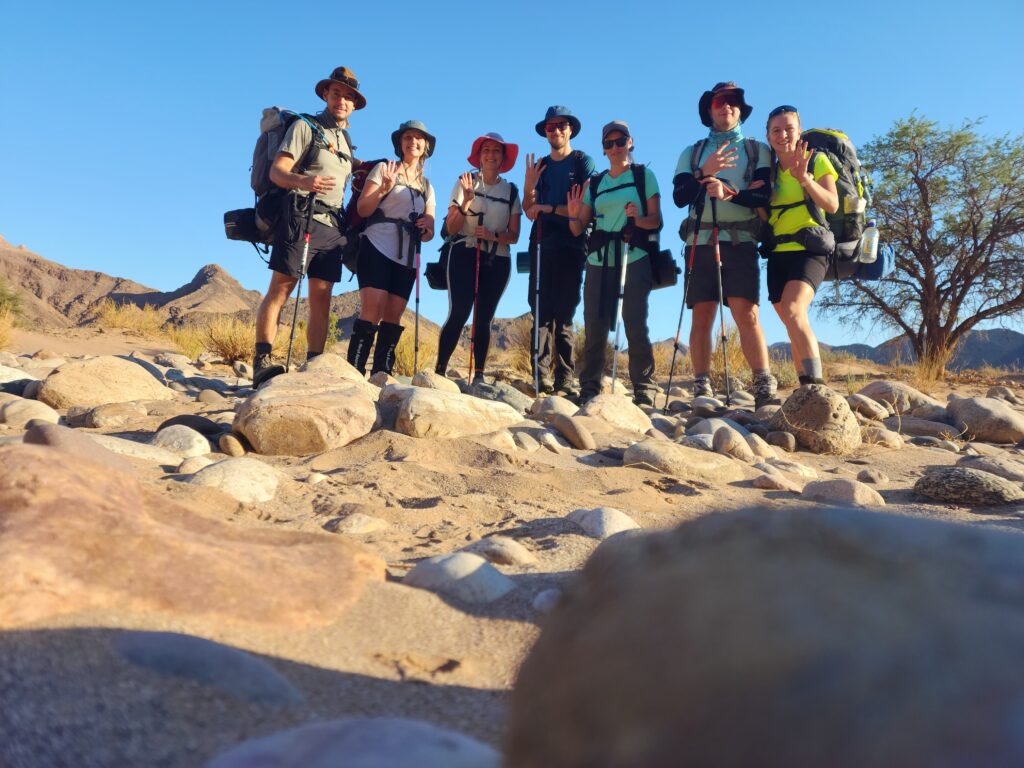
We were Group 61 of 2024 and started hiking Sunday 26th May. We were a group of 7. Four familiar faces and three new adventurers. The weather was hot; varying between 35°c and 38°c during the course of the day. This forced us to break up our days into two sessions, one early from 07:00 in the morning until midday, and then again from 15:00 until dusk. This was to miss the peak heat of the day and refrain from heat exhaustion and excessive water consumption.
Getting to the starting point
The Fish River Canyon hike commences at Hobas and ends at Ai-Ais. One can stay anywhere in southern Namibia and arrange transport to Hobas. Some guesthouses offer packages that include two nights’ accommodation, dinner, and transportation to Hobas and back from Ai-Ais. For those keen on camping, we suggest staying at Ai-Ais (the end point of the hike) and leaving your car there for the duration of the hike. Transport to Hobas can be arranged at the Ai-Ais reception for R400 per person (May 2024). The bus departs at 07:00 or 11:00. The road from Ai-Ais to Hobas is a smooth, fast dirt road, and the journey takes around two hours.
Another option is to camp at Hobas which is situated close to the start of the trail. We chose to stay at Ai-Ais, took the 07:00 transport, arrived at Hobas at 09:00, completed the paperwork (handing in the medical certificate, signing registers, etc.), and paid R100 per person conservation fees (May 2024). We reached the starting point at 09:15 and began hiking by 09:30. Our hiking bags were packed with a full 3L bladder and two empty bottles. We were aware that there was spring water available at our first camping spot, so 3L would be sufficient.

Hike Summary
Day 1 (Sunday 26th May) – 6.5km for the day; slept at Spring in the Reeds. The 2.5km descent took us an hour and a half and we made it down by 11:00. We stopped at the first shady spot we could find and took our first siesta of the trip until 15:00. We then pursued the last 4km in the heat to find the spring in the reeds. When we arrived at the place where there was flat ground and reeds all around, we knew there would be fresh water. We searched quite a bit in the hills, in various reeds and scratched around trying to find the water, with no luck. Eventually, we noticed plastic laid out on the floor with spring water, which somebody so kindly left for us all to collect fresh water from. While enjoying our dinner, we had some curious baboons and one kudu appear in the distance. The stars were out in thousands twinkling under the Canyon skies. We were in our tents by 20:00 and got some solid sleep in probably the quietest night I’ve experienced in my life. We also had the half-moon rise up above the canyon mountains from 01:00 which lit the evening.


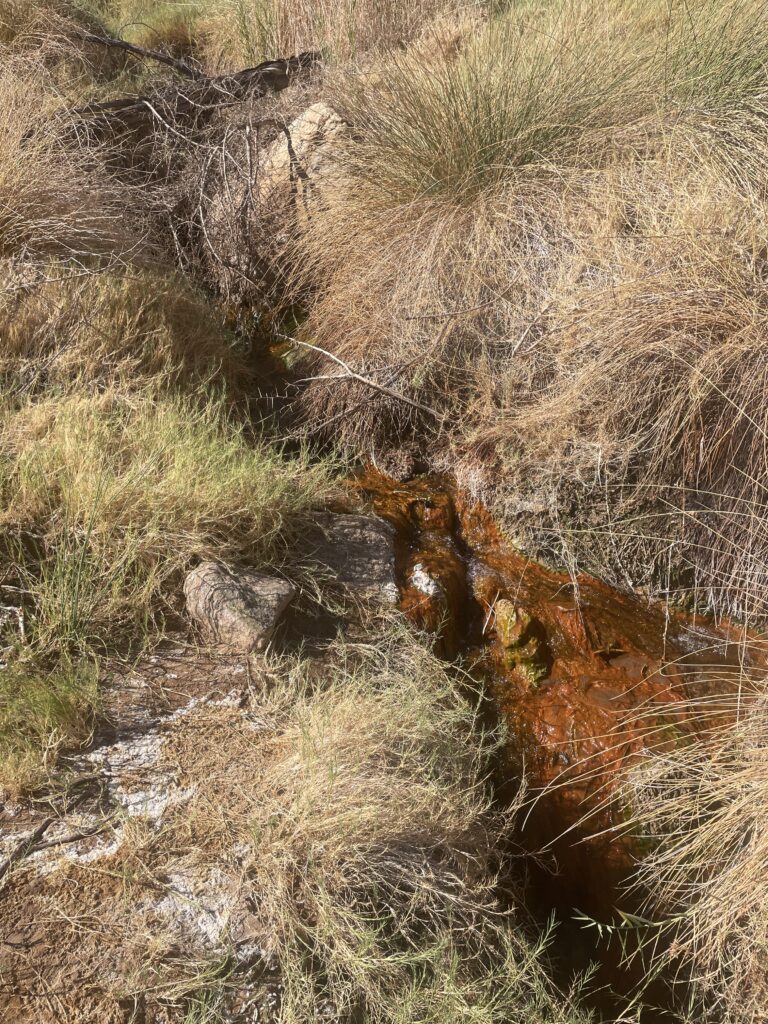
Day 2 (Monday 27th May) – 13km for the day with 118m elevation; slept at Palm Springs. We started hiking at 07:15 and managed to hike the full distance in one morning session. The terrain was made up of a lot of sand and rocks which made it challenging to keep a constant hiking speed. Keep an eye out for the Vespa motorcycle located on the left-hand side of the canyon. When we reached Palm Springs, we were welcomed with a very strong smell of sulphur. When following the smell, we found the flowing 57°c water. If you’ve never smelt sulphur before, it’s like smelling boiled eggs (BUT it’s pure water). What a mental game that turned out to be. We waited 30 minutes for the water to cool down before we filtered it. It was a pretty scary thought at the end of day 2 that we had not even completed 20km of hiking yet, leaving another 42km to complete in the upcoming 3 days. We ended the day sitting back and experiencing a spectacular sunset.

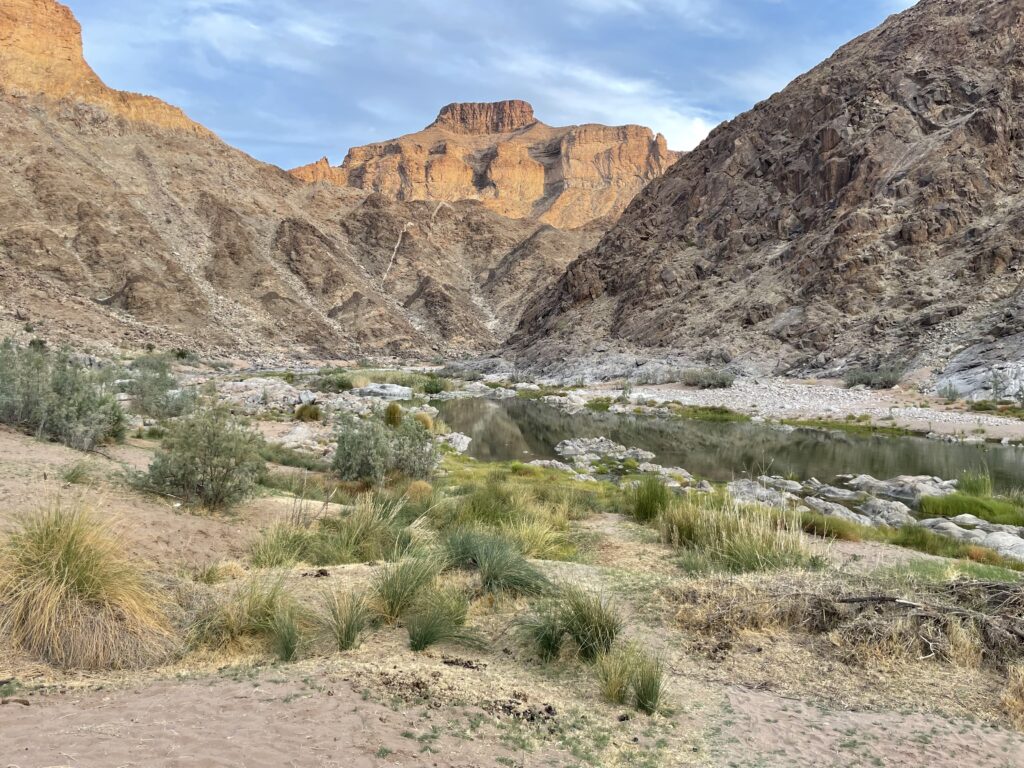

Day 3 (Tuesday 28th May) – 22km for the day with 185m elevation; slept on the path nearby caves (no water for the evening). We were superbly lucky to have a cloudy day and our path was made up of flat and hard surface which allowed us to make cover the distance. Within the first kilometer of walking we were lucky enough to spot our first wild horse drinking from the pools. Though very weary of our presence, the wild horse kept at its business and didn’t move, nor scared of us. It was clear, we were in their territory! Respect my horse, respect!
It was on this day that we walked past the first emergency exit, 20km landmark, 30km landmark as well as the 40km landmark. We took a siesta session at 12:30 when we reached Pink Rock. There was a fresh pool available, and that’s also where we spotted the three water marshals (carrying 10L of water each) who were going out to fill the water tanks. They were kind enough to leave us with 10L which we split amongst the 7 of us. This day was tiring in terms of the distance we had to cover and by 22km we stopped and set up camp on the hiking path.


Day 4 (Wednesday 29th May) – 16km for the day; slept at Pink Palace. The fourth day was probably the most challenging in terms of weather. There was not a cloud in sight, so it was a demanding, hot and long day. This is the day where we walked past the second (and last) emergency exit. This is also the day where the three shortcuts are available to hikers; namely, Bushy Corner, the shortcut at the 50km sign and Vasvatnek. We did not take the first shortcut at Bushy Corner; the effort needed to put in, is not worth the km you save. But we did take the second and third shortcut. A shortcut entails uphill and uneven terrain, however, the distance you cut out, you’ll be thankful for at the end of the hike. The endpoint of day 4 is the first concrete structure that we saw in the last four days of hiking. Never did we ever think seeing concrete would get us this excited. It was so great to rest on the bench, be able to lean against a solid wall and have access to the 1000L water tank. Given this was our last evening out in the canyon, as soon as the sunset and the tiredness kicked in, we got into our tent to enjoy our last evening with 10 hours of uninterrupted sleep that we’ve had for three consecutive evenings. It was an incredible feeling to be so tired to fall asleep immediately and sleep for so long allowing your body to fully recovery. You wake up the next morning feeling so rejuvenated and ready for the days adventure.
Day 5 (Thursday 30th May)- 15km for the day; finish at Ai Ais. Knowing it’s the last day, you’re automatically so determined to complete this adventure! After a few hot days, we were surprised to need to wear one or two extra layers to stay warm. But as soon as we started walking, we were soon in short sleeves again. We motored the 15km in one session and finished the hike by 11:40AM. About 2.5 km from the end, there’s a pipe (which indicates there’s civilisation nearby and the finish is in sight!). As we walked and followed the hiking footsteps which we’ve been following for the last 60 odd kilometers, it was so exciting to see the hiking boot footprints mixed with flip flop prints in the sand, and eventually see barefoot prints in the sand. We could taste the end! In the distance, when we spotted the palm tree, we knew we’d made it. We were welcomed by the NWR staff members ringing the bell and a standing ovation, including those that are camping. We managed to keep it to together this whole trip, until this very moment, where we let out the tears. Tears of accomplishment, joy and pride. Finishing was such a dream come true.
Food
Given we knew the water levels were low, we strategically purchased food that required a minimal amount of water.
For breakfast, we took along oats (for the mornings where we had access to fresh water) and Futurelife that comes with the prepacked 200ml water (for the days where we didn’t have access to water).
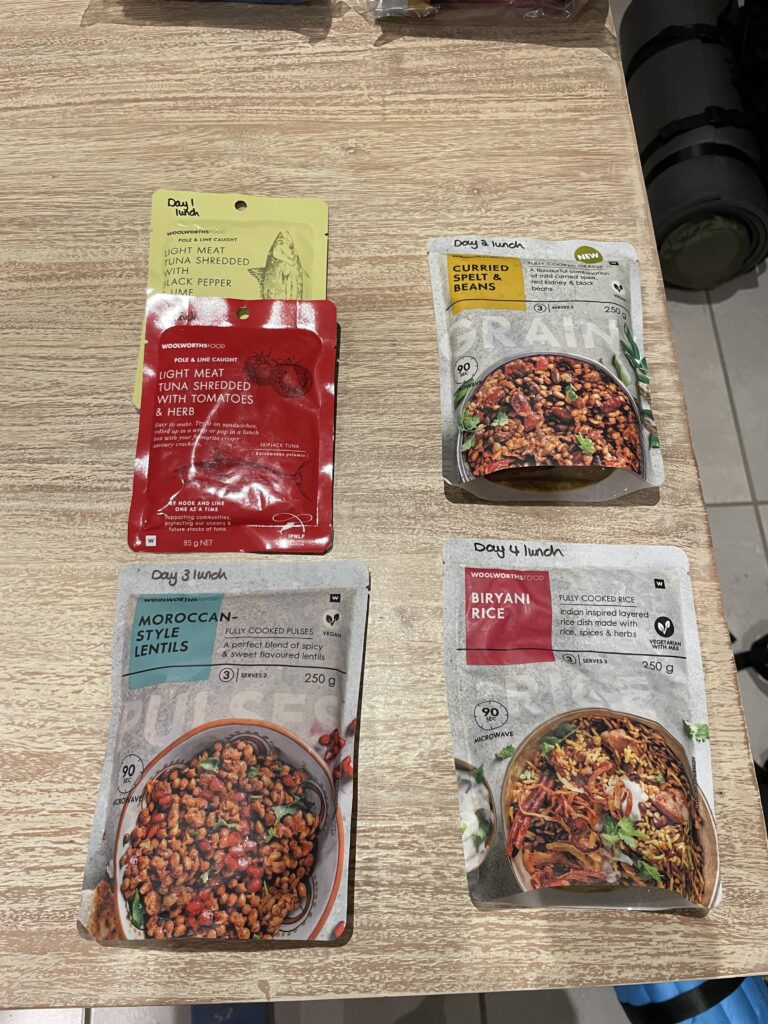
For lunch, we purchased Woolworths flavoured tuna, premade rice, lentils and beans.
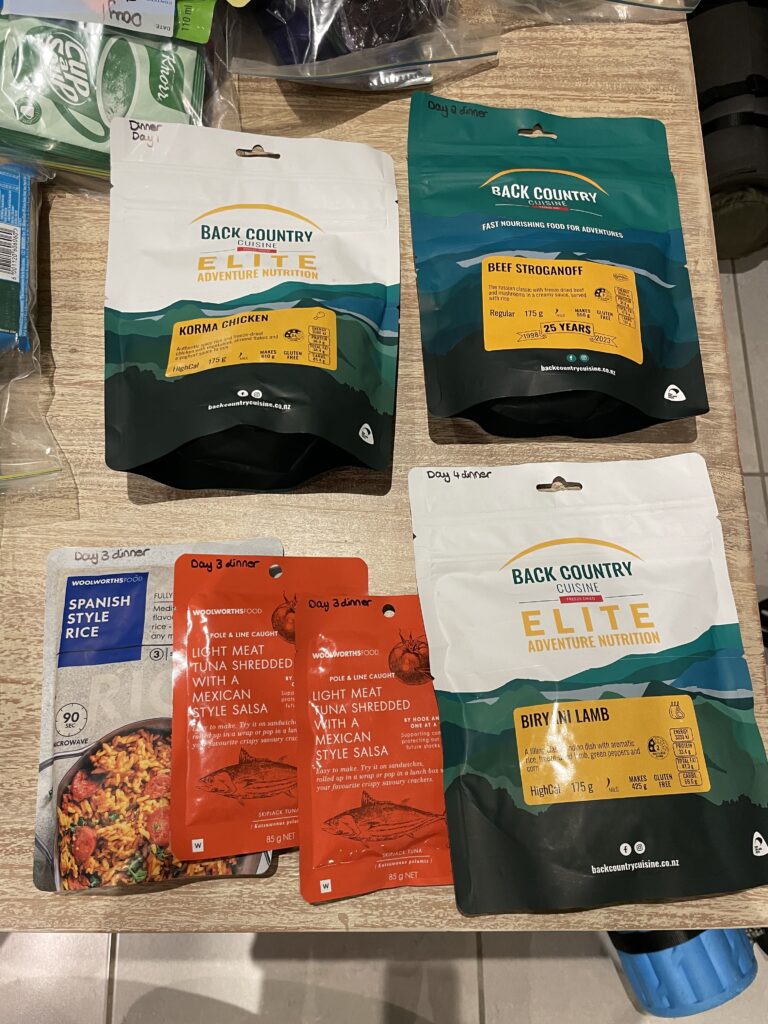
For dinner, we purchased Back Country bags. They were surprisingly super tasty. It was the first time we tried this, and it was delicious. The Elite version takes significantly less water to make (250 – 375 ml) instead of 600ml of boiling water. We took along Chicken Korma (that actually came with dehydrated natural yoghurt – how fancy?), beef stroganoff, lamb biryani. YUM!
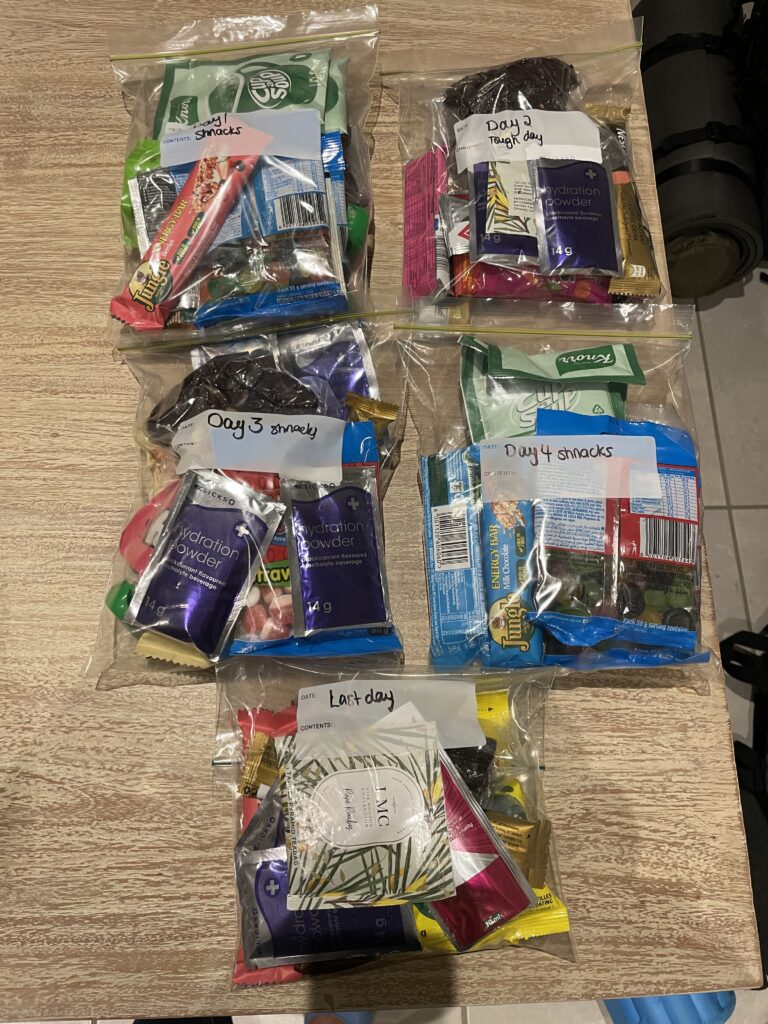
For snacks, we packed a variety of things packed per day. Each snack bag consisted of a hydration powder, energy bar, cup a soup, a packet of sweets, coffee bag, tea bag, squish (baby food), Kiri cheese, bio-plus, and droëwors/biltong. We were careful to not consume ingredients that would make us thirsty.
Something we found helpful that a couple took along was something to flavour the water, like Oros, or Slow-mag, Tang or Amila.
Water and Water Filtration
We would recommend using the drops instead of the tablets. Two drops per 750ml and let it stand for 30 minutes before consuming it. We experienced no nausea, vomiting, or upset tummies. Friends that used the tablet complained about feeling nauseous the whole time.
For this trip we purchased Aonijie water filtration system and Aqua Salveo Water Treatment 30ml (drops) and even though some of the water was spring water, we made use of both, just to make sure we don’t risk getting an upset tummy. Water filtering is a time-consuming task. We worked out that it took us a minute to filter 400ml of water. So, two minutes to fill a 750ml bottle, and then 30 minutes after putting in the drops before we could consume it.
A tip, when boiling water, we let it boil one minute for every liter to kill pathogenic microbes.
What we packed
We packed, weighed, repacked and reweighed several times until we were satisfied with the weight. Morne’s backbag weighed 18km (included 4.5l water) and Aylin’s backbag weighed 16kg (included 4.5l water). Lekker! Here’s a list of what we packed:
- The food mentioned above
- Water filtration mentioned above
- Slingsby Fish River Canyon map
- 3L bladder each
- 2 x 750ml water bottles
- 1 small kettle
- Sponge mattress
- Sleeping bag
- Small cushion
- Jacket
- Sports bra
- Underwear
- PJ shorts (wear the next day’s shirt as the PJ top)
- 5 pairs of wool hiking socks
- One pair of hiking pants (those that can zip off and become shorts)
- Hiking boots
- Flip flops
- Wet wipes
- Face cream
- Hat
- Sunscreen
- Deodorant
- Water filter
- Water droplets
- Sunlight liquid
- Cellphone
- Powerbank
- Tent (without the flysheet)
- Tent poles (no tent pens)
- Toilet paper
- Matches
- Gas canister
- Cup
- Fork, spoon and pocketknife
- Toothbrush
- Toothpaste
- Sunglasses
- Glasses
- Contact lense conditioner and container
- Contact lense (FUN trying to insert these in the mornings!)
- Earplugs
- Hiking stick
- Duct tape
- Kindle
- Headlamp
- Pen
- Lightweight shovel
- Salt and pepper
- Medicine mentioned below
Medicine we took along (packaged these into smaller portions):
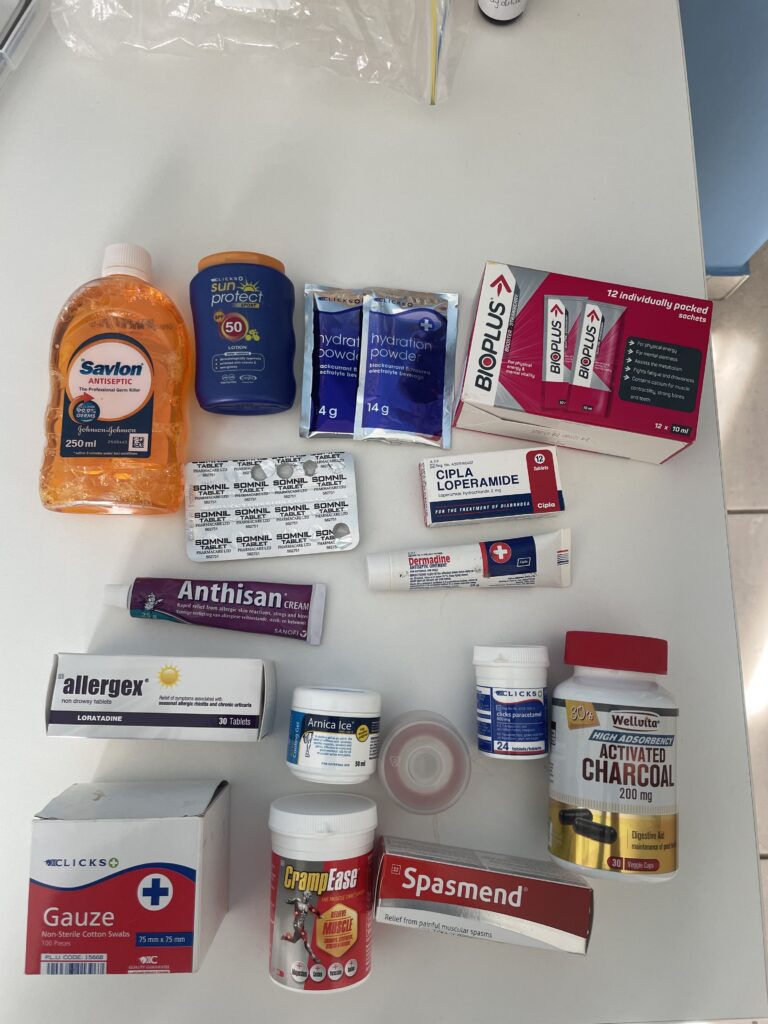
- Activated charcoal
- Easycramp
- Panado
- Savlon
- Sleeping pills
- Anthisan
- Gauze
- Material plaster
- Diarrhea pills
- Rehydrates
- Iceman
- Betadine
- Bioplus
Some fancy tips / secret to having finished the hike was:
- Fill one of your bottles with Rehydrate every day. Drink two on long days.
- We took an activated charcoal pill every morning
- We took an Easycramp pill in the morning before starting the hike to reduce the stiff muscles
- We took a Spasmed pill every evening
- We took a Panado pill every night before going to bed
- I discovered Barrier balm is the saving grace for blisters on feet. Take this along and smear it. I managed to walk three days with blisters on both my heels and managed to finish the hike without popping any of them. Shout out to Tessa for this!
- On long hiking days on a hot day, split your day into two sessions; early morning and later the afternoon
- Two couples carried a 20L bag which they filled with water in the evenings and showered. Fancy stuff! We used baby wipes, and also dipped in the pools where we could, and it was good enough.
- Small cushion to sleep on was such a winner. If you don’t have something like this, take along an empty cushion case and fill that with all your clothes in the evening and use that to make a cushion. You’ll be so thankful for some sound sleep during this trip.
- Pack the sample sized toothpaste that you normally get at your dentist. Saves space and weight.
This hike was an incredible experience, and it was such a pleasure starting and finishing as 7 in the group. Group 61 of 2024 for the win! Thanks for such an amazing memory and an unforgettable adventure Alicia, Tessa, Dieter, Hennelie & Dylan. Such champs!